28 September 2025
How AI Is Changing Architectural Visualization (And What It Cannot Replace)
Categories:
The conversation around AI in architectural visualization tends to split into two camps: those who believe automation will replace artists entirely, and those who dismiss AI as overhyped. Both miss what's actually happening. The real shift isn't about when visualization enters a project, what it's expected to accomplish, and which human capabilities become more valuable as a result.

The conversation around AI in architectural visualization tends to split into two camps: those who believe automation will replace artists entirely, and those who dismiss AI as overhyped. Both miss what's actually happening. The real shift isn't about when visualization enters a project, what it's expected to accomplish, and which human capabilities become more valuable as a result.
When Do Architects Actually Use Visualization Now?
For most of the industry's history, architectural visualization existed at the tail end of the design process. Architects would develop a project through sketches, plans, and technical drawings. Only once the design reached a mature state would visualizers receive a brief to produce marketing imagery. The renders arrived late, looked polished, and served a narrow purpose: help sell something that was already decided.
That sequence made sense when visualization was expensive and slow. Producing a single high-quality image required significant time investment, specialized hardware, and artists who had mastered complex software over years of practice.

Why Are Developers Requesting Renders Earlier in Projects?
AI has disrupted this sequence not by replacing the final output, but by making earlier outputs feasible. When generating a lighting study or massing exploration takes hours instead of days, visualization becomes viable at stages where it previously wasn't economical. Developers can now see spatial relationships before committing to a direction. Architects can test atmospheric qualities while the design is still fluid.
This earlier involvement changes the function of visualization entirely. Instead of illustrating decisions that have already been made, visuals now inform decisions that are still open. A render produced in week two of a feasibility study serves a fundamentally different purpose than one produced in month eight of a marketing campaign.
How Does Early-Stage Visualization Affect Project Decisions?
The practical consequence is that visualization teams now engage with projects when objectives are unclear, inputs are incomplete, and stakeholders may not yet agree on direction. This is uncomfortable territory for anyone trained to execute against fixed briefs. But it's also where visualization creates the most leverage.
For studios that have adapted to this shift, the change in timing has expanded both scope and value. Work that once concentrated in a few intense weeks before a sales launch now distributes across a project's entire lifecycle. This is particularly evident in architectural concept design sprints, where visualization supports rapid iteration during the earliest planning phases.
Early-stage visualization calls for comfort with ambiguity, speed in iteration, and judgment about what level of finish serves the current decision. Those who remain oriented toward polished final deliverables find themselves competing for a shrinking portion of the market.
Is Architectural Visualization Getting Easier or Harder?
There's an intuitive assumption that as tools become more accessible, professions become easier to enter and succeed in. Software that once required years of specialized training now offers more approachable interfaces. Learning resources have proliferated online. Hardware costs have dropped.
Yet the experience of working professionals tells a different story. Competition has intensified, not eased. Client expectations have risen, not relaxed.

Why Is Competition Increasing When Tools Are More Accessible?
The mechanism behind this paradox is straightforward. When more people can produce competent work, competent work loses its competitive value. The baseline moves upward. What distinguished a professional five years ago now qualifies as table stakes. Clients have seen enough good renders that good is no longer impressive.
What clients seek now is judgment. The ability to look at a project brief, a site context, a target audience, and a commercial objective, then determine what should be visualized, from what perspective, at what moment in the narrative. This is not a technical skill. It cannot be automated. It develops through exposure to real projects and real client dynamics.
What Separates Professional Visualization Artists From Amateurs?
Consider two visualization artists given identical inputs: the same architectural model, the same site data, the same general brief. One produces a technically flawless render that faithfully represents the geometry. The other produces an image that captures something specific about how the space will feel at a particular time of day, to a particular type of person, in service of a particular commercial goal. The technical quality might be comparable. The strategic value is not.
This divergence explains why the profession feels more demanding even as tools improve. The technical floor has risen, which means artists must be technically proficient just to compete. But technical proficiency no longer creates differentiation. Differentiation comes from interpretation of objectives, understanding of audience, and confidence in editorial decisions. Strong art direction has become the dividing line between commodity production and strategic visual communication.
What Skills Do Junior CG Artists Need in 2025?
For junior artists entering the field, this creates a challenging dynamic. They're expected to reach technical competence faster than previous generations while simultaneously developing strategic awareness earlier. The runway for being "just a technical artist" has shortened.
Studios face a parallel challenge in hiring and development. Technical portfolios have become less predictive of professional effectiveness. An artist with demonstrated ability to navigate complexity and communicate rationale may prove far more valuable than one with a polished portfolio but limited strategic thinking.
What Do Clients Actually Want From Architectural Visualization?
Client expectations have evolved in ways that many visualization providers have been slow to fully internalize. The deeper change is in what clients believe visualization is for.
The traditional framing positioned visualization as a creative service. Clients came with a project, requested imagery, and evaluated the result primarily on aesthetic grounds. These questions still matter, but they no longer define the full scope of evaluation.
How Are Developers Using Renders to Secure Funding?
Today, sophisticated clients approach visualization as a problem-solving input. They have specific challenges they need help addressing: a planning committee that needs convincing, an investor presentation that needs impact, a sales process that needs acceleration. The visualization is a means to these ends, not an end in itself.
This reframing changes the nature of the brief. Instead of "we need renders of our new development," the conversation becomes "we need to help our sales team close faster" or "we need investors to understand why this location justifies premium pricing." The visual output is evaluated by its effectiveness in context rather than its quality in isolation.
Why Do Beautiful Renders Sometimes Fail Commercially?
For studios accustomed to the creative service model, this shift can feel uncomfortable. Being evaluated on downstream outcomes introduces variables beyond the studio's control. A beautiful visualization might fail commercially because the underlying project was poorly positioned.
But this messiness also creates opportunity. Studios that embrace the problem-solving framing can expand their relevance and their fees. When you're solving a business problem rather than producing an aesthetic deliverable, the value ceiling rises.
How Should Studios Approach Client Discovery?
The practical implication is that discovery and strategy now precede production in importance. Understanding what the client actually needs to accomplish matters more than understanding what they say they want. A client might request a set of hero images when what they actually need is a narrative sequence that builds confidence through a decision process.
This is where UX research principles increasingly apply to visualization work. Understanding how different stakeholders will interact with visual content shapes more effective outputs than simply asking "what do you want this to look like?"
Studios that probe these questions create differentiation that's difficult to compete away on price. This connects to brand strategy. The visual output is an expression of positioning. Getting the messaging and positioning right before visualization begins prevents expensive rework and ensures the visual narrative serves the commercial story.
Will AI Replace Architectural Visualization Artists?
The traditional career path in architectural visualization followed a predictable arc. Junior artists learned software and techniques, gradually building technical proficiency. Senior artists demonstrated mastery through the quality and efficiency of their output.
AI is compressing the execution portion of this arc without eliminating the need for human involvement. Tasks that once required hours of manual work can now be accelerated or partially automated. But the reduction in execution time hasn't reduced the need for human judgment.

What Tasks Can AI Actually Do in Architectural Visualization?
When an artist can generate multiple options in the time previously required for one, the question shifts from "can we produce this?" to "which of these should we produce?" When lighting variations can be explored rapidly, the question becomes "which lighting tells the right story?"
These are interpretive questions, not technical ones. They require understanding of the project's goals, the audience's psychology, the decision context, and the narrative arc. They require the confidence to make choices and articulate why those choices serve the objective.
What Can't AI Do in Visualization Work?
The most valuable professionals combine interpretation and execution: they can see what needs to be done and they can do it at a high level. But the balance of value has shifted. An artist who can execute brilliantly but cannot interpret strategically is more vulnerable to displacement than an artist who interprets strategically and executes competently.
Studios need fewer people in pure production roles and more people in hybrid roles that span interpretation and execution. Junior positions become harder to define because the traditional entry path of pure production work is shrinking.
How Should CG Artists Future-Proof Their Careers?
For individual artists, the message is clear: technical skill remains necessary but is no longer sufficient. The artists who will thrive are those who invest in understanding the business context of the work, who develop communication skills for operating with non-visual stakeholders, and who cultivate judgment for making editorial decisions under ambiguity.
This is uncomfortable for artists who entered the profession because they loved the craft of image-making. But craft without context is increasingly a commodity. The market rewards craft applied with strategic intent.
What Does Innovation Mean in Architectural Visualization Today?
The word innovation gets attached to visualization work frequently, usually referencing new visual techniques or novel rendering approaches. These forms of innovation matter, but they're not where the most significant changes are occurring.
The more consequential innovation is in how visualization connects to everything around it. How does a visualization integrate with a sales process? How does it update as design evolves? These questions of integration and performance are reshaping the field.
Why Are Static Renders Becoming Less Valuable?
Consider the difference between a static render and an interactive experience. The visual quality might be comparable. But the interactive version can be updated as the design changes, explored by different stakeholders with different interests, and embedded in presentations without requiring new production each time.
This is why architectural visualization increasingly resembles digital product development. Outputs are expected to be modular, updateable, and system-compatible. The one-off masterpiece is giving way to living visual assets that evolve with projects. This extends to architectural animations that can be repurposed across marketing channels and investor presentations.
How Are Leading Studios Differentiating Their Services?
Studios positioned to deliver integrated output have structural advantages. They can serve clients throughout a project's lifecycle rather than in isolated production windows. They can build on previous work rather than starting fresh each time.
But operating this way requires capabilities that traditional visualization studios often lack. It requires website design and development expertise to create platforms where visual content performs. It requires strategic perspective that connects visualization to marketing objectives and user experience.
The boundaries between visualization, development, strategy, and design have blurred because clients need solutions that span these boundaries. A coherent digital strategy now underpins effective visualization work, connecting individual visual assets to broader commercial ecosystems.
How Is Real-Time Rendering Changing Architectural Visualization?
The adoption of real-time rendering engines, originally developed for gaming, has introduced capabilities that go beyond faster image generation. The ability to visualize in real-time changes what's possible to deliver and how feedback cycles work.
When changes can be seen immediately, collaboration dynamics shift. A design review that previously required days of preparation can happen spontaneously as ideas are discussed. Stakeholders can now participate in visual exploration alongside the team producing it.
What Are the Benefits and Challenges of Real-Time Visualization?
The benefit is that decisions become better informed because visual feedback is immediate. The challenge is that visualization work becomes less distinct as a deliverable and more embedded in continuous process. Billing models and project scoping need to adapt.
Real-time engines enable outputs that weren't previously practical: interactive real estate solutions, digital twins, and virtual environments that clients can explore independently. Virtual production techniques from film are increasingly finding applications in architectural marketing.
How Do Interactive Experiences Change Buyer Behavior?
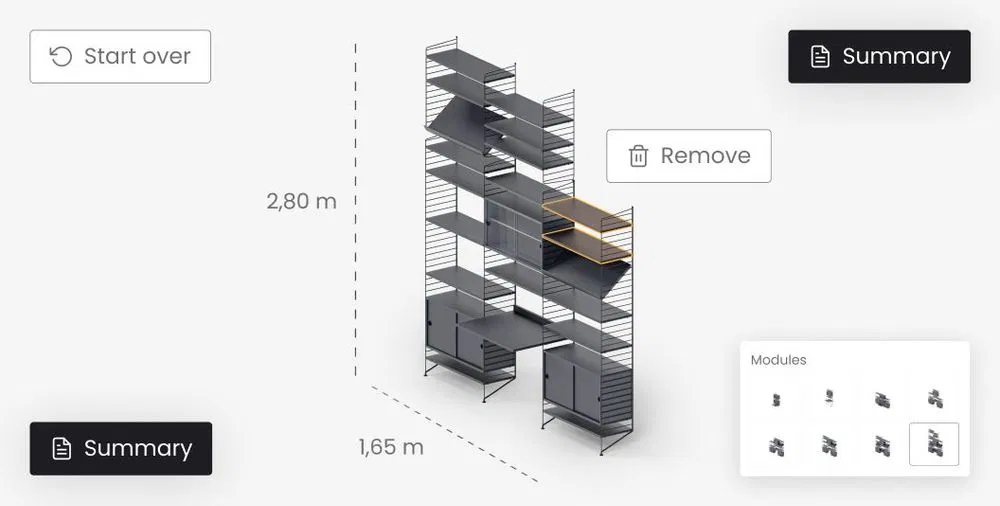
A buyer exploring a development through an interactive configurator has a different relationship with the project than one viewing renders in a brochure. They're active participants constructing their own experience. This shift in agency changes how visualization influences decisions.
The skillset for real-time work overlaps with traditional visualization but adds requirements around optimization and interaction design. Studios building this capability often need to integrate talent from game development alongside traditional CG artists.
Our work with luxury automotive brands demonstrates how real-time visualization enables configuration experiences that drive buyer engagement. Similarly, our hospitality marketing projects leverage real-time engines to create immersive previews.
How to Start a Career in Architectural Visualization in 2026
For someone considering a career in architectural visualization today, the landscape is more complex but also more interesting. The ceiling of what's possible has risen. The floor of what's required to compete has also risen.
Technical proficiency remains the foundation. Understanding how light behaves, how materials interact with that light, and how composition guides attention are all fundamental. These principles don't change because AI can accelerate certain tasks.
What Should Visualization Students Focus On?
Technical proficiency alone no longer creates a durable career. The artists who will succeed combine technical skill with broader understanding: how projects are financed, how decisions are made, and how visualization fits into larger systems of communication.
This means deliberate investment in capabilities that traditional visualization training neglects. Communication skills matter because articulating creative rationale is now part of the job. Understanding content strategy reveals how assets fit into larger communication systems. Familiarity with copywriting principles helps artists understand how visual and verbal narratives work together.
Is Architectural Visualization a Good Career Path?
The career path is less predictable than it once was. The traditional progression assumed a stable hierarchy within studios organized around execution. That hierarchy is being compressed as AI changes execution economics. New paths are emerging that move laterally into strategy or technology.
An artist who develops rare combinations of skill, whether technical mastery plus strategic thinking or visualization expertise plus development capability, can create positions that didn't previously exist. Understanding how conversion rate optimization applies to visualization assets adds strategic value that pure technical skill cannot provide.
What Parts of Visualization Work Will Always Require Humans?
There's a temptation to either catastrophize or minimize AI's impact. Catastrophizing says AI will replace human artists entirely. Minimizing says AI is just another tool. Both positions avoid thinking clearly about what's actually happening.
What AI does exceptionally well is generate visual content at scale. It can produce variations quickly and execute certain technical tasks with efficiency that humans cannot match.
Why Does Judgment Matter More Than Technical Skill Now?
What AI does not do is understand meaning. It cannot determine whether a visualization serves its purpose because it doesn't know what the purpose is. It cannot judge whether an image will build confidence in a skeptical planning committee. It cannot decide which moment in a narrative deserves emphasis.
These limitations reflect something fundamental about the difference between pattern generation and judgment. AI systems are extraordinarily good at patterns. They are not equipped to make decisions about what patterns should accomplish.
Where Does Human Value Concentrate in an AI-Enabled Workflow?
The most valuable visualization work is moving toward judgment-intensive activities. Interpretation of ambiguous briefs. Navigation of stakeholder complexity. Editorial decisions about what to show and omit. Strategic alignment of visual narrative with commercial objectives.
The artists who focus on developing these capabilities will find their work becoming more valuable as AI improves. They will use AI as a powerful instrument for executing the decisions they make, while making decisions that AI cannot make.
Our approach integrates AI capabilities with human judgment. We've found that the combination amplifies what both can do. AI accelerates exploration and execution. Human expertise directs that exploration toward outcomes that matter.
What Is the Future of Architectural Visualization?
The profession is changing. The specific tasks that constitute daily work are shifting. The skills that define excellence are evolving. But the core function, helping people understand and feel what spaces will become before those spaces exist, remains essential. And the human capacity to do that work with judgment, empathy, and strategic intent remains beyond the reach of automation.
Keep reading

CGI
Business
1/10
The Benefits of 3D Walkthroughs for Architects and Clients
08 August 2023
CGI
Business
The Benefits of 3D Walkthroughs for Architects and Clients
08 August 2023

CGI
2/10
The Importance of Lighting in Architectural Visualization
13 July 2023
CGI
The Importance of Lighting in Architectural Visualization
13 July 2023

CGI
3/10
Should You Choose 3D Product Renders or Professional Photography for Your Brand?
16 February 2026
CGI
Should You Choose 3D Product Renders or Professional Photography for Your Brand?
16 February 2026

CGI
4/10
Unlocking the Future of Urban Planning with 3D Digital Twins
02 September 2024
CGI
Unlocking the Future of Urban Planning with 3D Digital Twins
02 September 2024

CGI
5/10
How Cross-Industry Visualization Techniques Are Changing What's Possible in Architectural and Product Marketing
02 October 2024
CGI
How Cross-Industry Visualization Techniques Are Changing What's Possible in Architectural and Product Marketing
02 October 2024

CGI
6/10
How Do Successful Visualization Studios Build Sustainable Growth?
09 October 2023
CGI
How Do Successful Visualization Studios Build Sustainable Growth?
09 October 2023
CGI
7/10
How to UX/UI Design a 3D Configurator That Makes Sense?
11 January 2026
CGI
How to UX/UI Design a 3D Configurator That Makes Sense?
11 January 2026

CGI
Marketing
8/10
Why Real Estate Property Launches Fail Without Integrated Communication
09 April 2025
CGI
Marketing
Why Real Estate Property Launches Fail Without Integrated Communication
09 April 2025

CGI
Marketing
9/10
How Architecture Firms Should Structure Visualization Capability in 2026: In-House, Outsourced, or Hybrid?
03 February 2026
CGI
Marketing
How Architecture Firms Should Structure Visualization Capability in 2026: In-House, Outsourced, or Hybrid?
03 February 2026
-1.png?width=1200&quality=75&format=webp)
CGI
10/10
How Does Architectural Visualization Work in Saudi Arabia's Vision 2030 Real Estate Market?
23 November 2025
CGI
How Does Architectural Visualization Work in Saudi Arabia's Vision 2030 Real Estate Market?
23 November 2025
1/10