03 February 2026
How Architecture Firms Should Structure Visualization Capability in 2026: In-House, Outsourced, or Hybrid?
Architectural visualization has evolved dramatically in recent years. AI-assisted rendering, real-time engines, and cloud infrastructure have changed both what's possible and what it costs to produce exceptional visualizations. These technological shifts, combined with changed talent dynamics and client expectations, mean the strategic calculus for how firms structure visualization capability has fundamentally changed. The question isn't whether visualization matters. It's how your specific firm should access this capability in 2026.
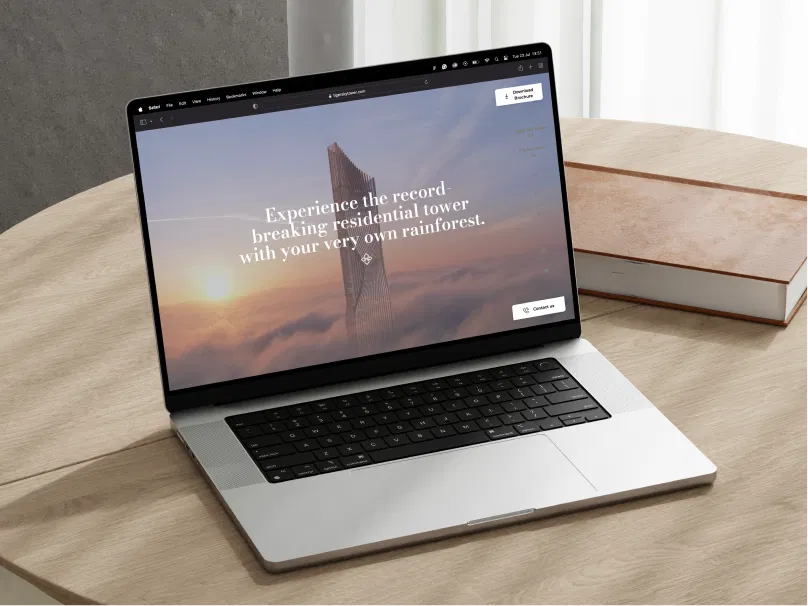
Architectural visualization has evolved dramatically in recent years. AI-assisted rendering, real-time engines, and cloud infrastructure have changed both what's possible and what it costs to produce exceptional visualizations. These technological shifts, combined with changed talent dynamics and client expectations, mean the strategic calculus for how firms structure visualization capability has fundamentally changed. The question isn't whether visualization matters. It's how your specific firm should access this capability in 2026.
What's Changed in Architectural Visualization in Recent Years?
Several technological and market shifts have altered the economics and feasibility of both in-house and outsourced visualization models. AI-assisted rendering has compressed production timelines and reduced the specialized skill requirements for certain visualization types. Tools that were cutting-edge just a few years ago are now table stakes. Real-time rendering engines have matured to where interactive walkthroughs are expected rather than impressive. Cloud rendering infrastructure has democratized access to computational power that previously required significant capital investment.
Simultaneously, talent expectations have shifted. Visualization artists increasingly expect remote flexibility, exposure to diverse projects, and access to cutting-edge technology. The best talent gravitates toward environments that provide these conditions, whether at specialized studios or well-resourced in-house teams. Client expectations have also evolved. The sophistication of visualization that impressed clients just two years ago is now baseline. Differentiation requires either exceptional craft, innovative approaches, or capabilities like Virtual Production and virtual reality integration that extend beyond static images.
How Have Economics Changed for In-House Teams?
The cost structure for in-house visualization teams has shifted in ways that affect viability calculations. Software costs have simultaneously increased and democratized. Subscription models for professional tools have made entry more accessible but create ongoing expense that accumulates over time. The total cost of maintaining cutting-edge capability has increased even as individual tool costs have decreased.
Hardware requirements have paradoxically both increased and decreased. Cloud rendering reduces the need for expensive local rendering farms, but real-time visualization and AI tools require powerful workstations. The capital expense has shifted from rendering infrastructure to artist workstations and cloud service subscriptions. DevOps and Infrastructure capabilities become critical for managing cloud rendering resources, maintaining rendering pipelines, and ensuring technical systems support production demands efficiently.
Architectural Visualizations production requires different cost structures depending on whether teams work primarily with traditional rendering, real-time engines, or hybrid approaches. Talent costs have increased as visualization specialists command higher compensation. The market for experienced architectural visualization artists has tightened, particularly for those with expertise in real-time engines, virtual production, and AI-assisted workflows. The competition for skilled artists means firms must offer not just competitive salaries but also access to interesting projects, professional development opportunities, and modern toolsets to attract and retain top talent.
How Have Outsourced Model Economics Evolved?
Specialized visualization studios have also seen their cost structures and value propositions shift. Studios have invested heavily in AI tooling, real-time capabilities, and cloud infrastructure. These investments create economies of scale that individual firms can't match, but they've also increased the baseline capability that all studios must maintain to remain competitive.
The geographic arbitrage that previously made outsourcing to certain locations particularly cost-effective has compressed over the past several years. Remote work normalization means talent can work from anywhere, reducing location-based cost advantages while expanding talent pools. Quality differentiation has become more pronounced. The gap between excellent and mediocre visualization studios has widened as technology enables the best studios to achieve results that were impossible even three years ago while also making it easier for mediocre studios to produce acceptable but unremarkable work.
Architectural Animations particularly benefit from studio specialization because animation requires skills and infrastructure that most in-house teams can't economically maintain. The specialized knowledge in timing, camera movement, lighting for motion, and rendering optimization for animation represents capability that only makes economic sense when spread across multiple clients and projects. Studios often combine visualization expertise with broader Content Production capabilities that serve multiple client needs beyond pure architectural rendering.
How Do You Evaluate Which Model Fits Your Firm?
The right visualization structure depends on your firm's specific characteristics, project mix, and strategic positioning. Several factors determine which approach creates most value. Rather than following industry trends or conventional wisdom, you need to honestly assess your own situation against clear evaluation criteria. The decision isn't about which model is objectively better but about which model fits your specific context, constraints, and strategic objectives.
What Firm Characteristics Favor In-House Capability?
Large practices with consistent visualization needs across multiple projects can achieve economies of scale with in-house teams. If you're producing visualizations continuously rather than in concentrated bursts, the fixed cost of in-house capability becomes economically efficient. The key threshold is whether your visualization demand can keep a dedicated team productively utilized throughout the year rather than creating peaks of overwork and valleys of idle capacity.
Firms with distinctive visual styles that define their brand identity often benefit from in-house control. If your visualization approach is a competitive differentiator rather than a commodity service, in-house teams can develop and maintain that distinctive approach more reliably than outsourced relationships. Strong Brand Identity requires consistent visual language across all client touchpoints, and visualization becomes a critical expression of that identity. Teaching external studios your specific aesthetic requires ongoing investment and still may not achieve the consistency that in-house teams naturally develop.
Practices where architects maintain direct involvement in visualization refinement throughout design development may find in-house teams enable tighter integration. The collaborative iteration between design and visualization teams works most smoothly when teams are organizationally integrated and can communicate informally throughout the day rather than through structured handoffs and formal review cycles. This integration often requires UX Research capabilities to understand how clients and end users interact with and respond to different visualization approaches.
When Does Outsourcing Create Clear Advantages?
Small to mid-sized practices with variable visualization needs benefit from outsourcing's flexibility. If visualization demands spike around competitions and marketing pushes but remain minimal during design development and construction administration, paying for capability only when needed makes economic sense. The variable cost structure of outsourcing aligns expense with actual demand rather than maintaining fixed overhead during slow periods.
Firms without existing visualization infrastructure avoid the capital investment and learning curve by outsourcing. Building in-house capability from zero requires not just hiring but also establishing workflows, acquiring tools, developing organizational knowledge, and accepting the inevitable inefficiency of the learning curve. Outsourcing provides immediate access to mature capability without this investment. Studios bring established Art Direction expertise and quality control processes that take years to develop internally.
Practices pursuing visualization sophistication beyond their core competency benefit from specialized studio expertise. If you need Interactive Real Estate Solutions or virtual reality integration but this isn't your firm's focus area, specialized studios bring expertise you can't economically build internally. The depth of knowledge required for cutting-edge visualization techniques makes sense only for organizations where visualization is a primary focus rather than a supporting function. Studios often integrate Photo & Video Production capabilities that complement architectural visualization for comprehensive project marketing.
How Do Hybrid Models Combine Advantages?
Many firms find that hybrid approaches combining in-house and outsourced capability create optimal results. These models attempt to capture the collaborative benefits and cost efficiency of in-house teams for routine work while maintaining access to specialized capabilities and surge capacity through outsourced relationships.
Core capability in-house with outsourced capacity for peaks is a common hybrid model. Maintain a small in-house team for ongoing visualization needs and baseline capability, then engage external studios for competition pushes, major marketing initiatives, or specialized requirements beyond in-house expertise. This approach provides the collaborative benefits of in-house teams while maintaining flexibility to scale and access specialized capabilities when needed.
Strategic partnership models where firms develop deep ongoing relationships with visualization studios create some benefits of in-house teams while maintaining outsourced flexibility. Studios that work repeatedly with the same firm develop deep understanding of the firm's aesthetic, workflow, and standards while remaining economically variable costs. These partnerships work best when both parties commit to the relationship long-term and invest in mutual understanding rather than treating each project as a one-off transaction.
What Costs Should You Actually Compare?
Accurate cost comparison between in-house and outsourced models requires accounting for total costs rather than just obvious expenses. Many firms underestimate the true cost of in-house teams by focusing only on salary while overlooking the substantial additional expenses that accumulate around each team member. Similarly, outsourced costs can appear deceptively simple based on per-image pricing while hiding costs related to management overhead, revision cycles, and relationship development.
What Are the True Costs of In-House Teams?
Direct compensation includes not just salary but benefits, payroll taxes, and any performance bonuses. For skilled visualization artists in competitive markets, total compensation typically runs 30 to 40 percent above base salary when all costs are included. A $70,000 salary becomes $90,000 to $100,000 in total compensation cost when you account for health insurance, retirement contributions, payroll taxes, and other benefits.
Software subscriptions accumulate across multiple tools. Professional rendering engines, 3D modeling software, post-processing applications, asset libraries, and AI tools each carry subscription costs. Budget $5,000 to $15,000 annually per artist depending on tool stack. This cost continues regardless of whether the artist is actively producing visualizations or between projects.
Hardware requires both initial investment and regular refresh. Professional workstations for real-time rendering and AI tools run $3,000 to $8,000 per artist. Plan for replacement every three to four years as performance requirements increase and hardware ages. Cloud rendering costs continue as ongoing expenses when in-house hardware capacity is insufficient for deadlines or complexity. Full Stack Development expertise becomes necessary when visualization extends into interactive applications or when technical integration with other systems is required.
Training and professional development keeps skills current as technology evolves. Budget time and money for ongoing learning or accept that capability will degrade relative to cutting edge. Management overhead increases with team size. Someone needs to manage workflow, maintain quality standards, handle technical infrastructure, and develop capability.
How Should You Calculate Outsourced Costs?
Outsourced visualization costs are more straightforward but require realistic assessment of scope and frequency. Per-project costs vary based on visualization complexity, quantity, and required turnaround. Simple exterior renderings cost less than intricate interior scenes with complex materials and lighting. Architectural Animations cost significantly more than static images due to the additional complexity of motion, timing, and rendering requirements.
Rush fees apply when timelines are compressed. Studios charge premium rates for expedited work that disrupts their workflow planning. Revision costs accumulate when initial direction is unclear or when internal alignment issues cause repeated changes. Well-defined briefs and decisive feedback loops minimize revision expenses but require internal discipline and clear decision authority.
Relationship investment in developing shared understanding with studio partners creates value over time but represents real cost. Early projects with new studios often require more communication and iteration than ongoing relationships where studios understand your preferences and standards. The cost comparison should evaluate total cost per quality visualization delivered, not just hourly rates or project fees.
What Quality Considerations Affect the Decision?
Quality requirements and differentiation strategy influence whether in-house or outsourced models better serve your needs. The relationship between quality and structure is complex because both models can produce excellent work when properly executed, but they excel in different quality dimensions and under different constraints.
When Does Quality Favor In-House Control?
Distinctive visual style that defines your brand becomes difficult to maintain through outsourced relationships when your aesthetic differs significantly from industry norms. Teaching external studios your specific approach requires investment that may exceed the value of outsourcing. If your visualization style is a competitive differentiator and clients recognize your work by its distinctive quality, in-house control helps maintain that consistency.
Iterative refinement throughout design development benefits from in-house teams when visualization evolves closely with architectural design. The collaborative back-and-forth between design and visualization teams flows more naturally when organizationally integrated. This integration enables UX Design thinking to inform how spaces are visualized and how interactive elements help clients understand spatial relationships. Proprietary techniques or specialized knowledge that creates competitive advantage should generally remain in-house. If your visualization approach is a differentiator, outsourcing it risks losing that advantage.
When Does Outsourcing Deliver Superior Quality?
Cutting-edge techniques and technologies that require dedicated research and development investment are typically accessible only through specialized studios. Automotive CGI and 3D Product Visualization techniques developed in other industries often enter architecture through studios with diverse client bases and exposure to multiple sectors.
Specialized capabilities like 3D Animations, fluid simulation, advanced vegetation rendering, or virtual reality integration require expertise that most architectural practices can't economically maintain in-house. Studios specializing in these areas deliver superior results because they invest in capability that serves multiple clients rather than trying to justify the investment from a single firm's occasional needs.
Consistent quality across high-volume production benefits from studio infrastructure and review processes. Studios with dedicated art direction and multi-stage review maintain quality standards that can be difficult for in-house teams under deadline pressure. Peak quality for critical projects like competitions or landmark commissions may justify engaging the absolute best studios regardless of cost, even if you maintain in-house capability for routine work.
How Do Workflow and Integration Considerations Factor In?
The operational implications of visualization structure affect efficiency and collaboration quality. Workflow compatibility matters as much as quality capability because the best visualization work becomes worthless if it can't be integrated efficiently into your design and client delivery processes.
What Workflow Factors Favor In-House Teams?
Real-time collaboration during design development when visualization evolves continuously with architectural design benefits from organizational integration. The quick informal exchanges between design and visualization teams happen more naturally when they're in the same organizational structure and can communicate constantly throughout the day rather than through scheduled calls and formal review meetings.
Complex projects requiring deep technical coordination between architecture and visualization may flow better with in-house teams. When visualization isn't just creating images but informing design decisions through spatial analysis or material studies, tight integration matters. Proprietary workflow integration where visualization connects to your specific BIM workflows, asset libraries, and project management systems often requires in-house capability or deeply embedded partners who understand your technical environment.
When Do Outsourced Workflows Create Efficiency?
Clear handoff points between design and visualization work well with outsourced relationships. When you can provide complete design information at defined milestones and receive finished visualizations without iterative collaboration, outsourcing creates efficiency by allowing both parties to work independently between review points.
Parallel production across multiple projects benefits from outsourcing's scalability. Studios can deploy multiple artists across your projects simultaneously, accelerating timelines that would bottleneck with smaller in-house teams. Studios with global operations can leverage time zone differences for continuous production, delivering results faster than single-location teams. Deadline-driven production where you need to compress timelines occasionally benefits from studios' ability to surge resources when needed without the long-term commitment of maintaining that capacity in-house.
What Does the Implementation Path Look Like?
Changing visualization structure requires thoughtful implementation regardless of which direction you're moving. Transitions between models create disruption that must be managed carefully to avoid losing capability, damaging relationships, or compromising project delivery during the change.
How Do You Build In-House Capability If That's the Decision?
If analysis suggests in-house makes sense, implementation requires deliberate capability building. Start with experienced leadership who can establish standards, build workflow, and develop team capability. Don't start with junior artists and hope they'll figure it out. Your first visualization hire should be senior enough to create the foundation that others will build upon.
Invest in infrastructure before scaling team size. Establish software stack, hardware, cloud rendering relationships, asset libraries, and workflow before hiring multiple artists. Infrastructure shapes capability and trying to retrofit infrastructure after hiring creates inefficiency. Digital Twins development requires particularly sophisticated technical infrastructure when visualization must integrate with real-time data and building systems.
Begin with core visualization types that justify fixed capability and continue outsourcing specialization until volume warrants bringing in-house. Plan for ongoing training and professional development. Visualization technology evolves rapidly, so budget time and money for keeping skills current or accept that your in-house capability will lag behind industry cutting edge.
How Do You Transition From In-House to Outsourced?
If analysis suggests outsourcing makes more sense than current in-house teams, transition requires managing both capability and people considerations. Identify studios aligned with your quality standards and aesthetic before transitioning. Don't outsource without having vetted partners who can maintain your standards.
Transition gradually rather than immediately eliminating in-house capability. Overlap provides safety net and allows knowledge transfer to external partners. Handle internal team transitions professionally. If eliminating in-house roles, provide notice, severance, and if possible assistance finding next opportunities. Document standards, preferences, and workflow knowledge before transition so institutional knowledge transfers to external partners rather than disappearing with departing employees.
How Do You Optimize Hybrid Models?
If hybrid approach makes sense, implementation requires clear boundaries and workflow. Define which visualization types stay in-house versus outsource based on strategic value, frequency, and capability requirements. Document these boundaries so decisions are consistent rather than ad-hoc reactions to immediate circumstances.
Establish studio relationships before you need them. Don't wait for deadline pressure to find partners. Develop relationships during slower periods when you can properly evaluate capability and establish working relationships. Create efficient handoff processes between internal design teams and external studios through clear briefs, asset libraries, and feedback protocols. Maintain consistent quality standards across in-house and outsourced work so clients experience coherent quality regardless of production source.
Keep reading

Marketing
Business
1/10
Which Digital Investments Actually Hold Value During Budget Pressure: Website, Brand, or Content?
03 October 2023
Marketing
Business
Which Digital Investments Actually Hold Value During Budget Pressure: Website, Brand, or Content?
03 October 2023
CGI
Business
2/10
The Benefits of 3D Walkthroughs for Architects and Clients
08 August 2023
CGI
Business
The Benefits of 3D Walkthroughs for Architects and Clients
08 August 2023
Marketing
3/10
How Does Consumer Research Behavior Change Website Lead Generation Strategy?
11 February 2025
Marketing
How Does Consumer Research Behavior Change Website Lead Generation Strategy?
11 February 2025

CGI
4/10
The Importance of Lighting in Architectural Visualization
13 July 2023
CGI
The Importance of Lighting in Architectural Visualization
13 July 2023

Marketing
5/10
10 Critical Success Factors Every Startup Founder Must Master to Avoid Failure
10 December 2024
Marketing
10 Critical Success Factors Every Startup Founder Must Master to Avoid Failure
10 December 2024

Marketing
Design
6/10
UX/UI Design Trends for 2026: What's Worth Your Investment (And What's Just Hype)
13 January 2026
Marketing
Design
UX/UI Design Trends for 2026: What's Worth Your Investment (And What's Just Hype)
13 January 2026
Marketing
7/10
Creating an Interactive Buying Experience: The Power of 3D Product Configurators
13 August 2023
Marketing
Creating an Interactive Buying Experience: The Power of 3D Product Configurators
13 August 2023

Marketing
8/10
The Benefits of 360-Degree Product Views for Online Shopping
08 August 2023
Marketing
The Benefits of 360-Degree Product Views for Online Shopping
08 August 2023

CGI
9/10
Should You Choose 3D Product Renders or Professional Photography for Your Brand?
16 February 2026
CGI
Should You Choose 3D Product Renders or Professional Photography for Your Brand?
16 February 2026

Marketing
10/10
How Does 3D Product Animation Transform Social Media Marketing Performance?
10 January 2024
Marketing
How Does 3D Product Animation Transform Social Media Marketing Performance?
10 January 2024
1/10