
Turning Code Compliance Group's Process Into a Well-Crafted Story
Most compliance consultancies get called in too late. By the time they are engaged, the costly problems have already been designed in. CCG wanted to change that. So we rebuilt how they present their value, from the ground up, using visual storytelling that speaks directly to architects, developers, and project managers in the language they already use.
Client:
Code Compliance Group
Year:
2026
Industry:
Construction
Services:
Website Design & Development
3D Animation
Motion Design
.png?width=1600&quality=75&format=webp)
Client:
Code Compliance Group
Year:
2026
Industry:
Construction
Services:
Website Design & Development
3D Animation
Motion Design
Executive Summary
Code Compliance Group is an Australian code compliance consultancy that uses AI technology and 3D model assessments to identify regulatory issues before they reach construction. Their service spans seven stages of the project lifecycle, from feasibility concept through to post-occupancy monitoring. Despite the depth of their capability, the way it was being communicated meant clients were consistently engaging them after the costly decisions had already been made. Digital Bunch was commissioned to redesign the website from the ground up, building a structured visual platform that speaks directly to the architects, developers, and project managers who commission compliance services, and makes the case for early engagement at every stage.
Digital Bunch Solution
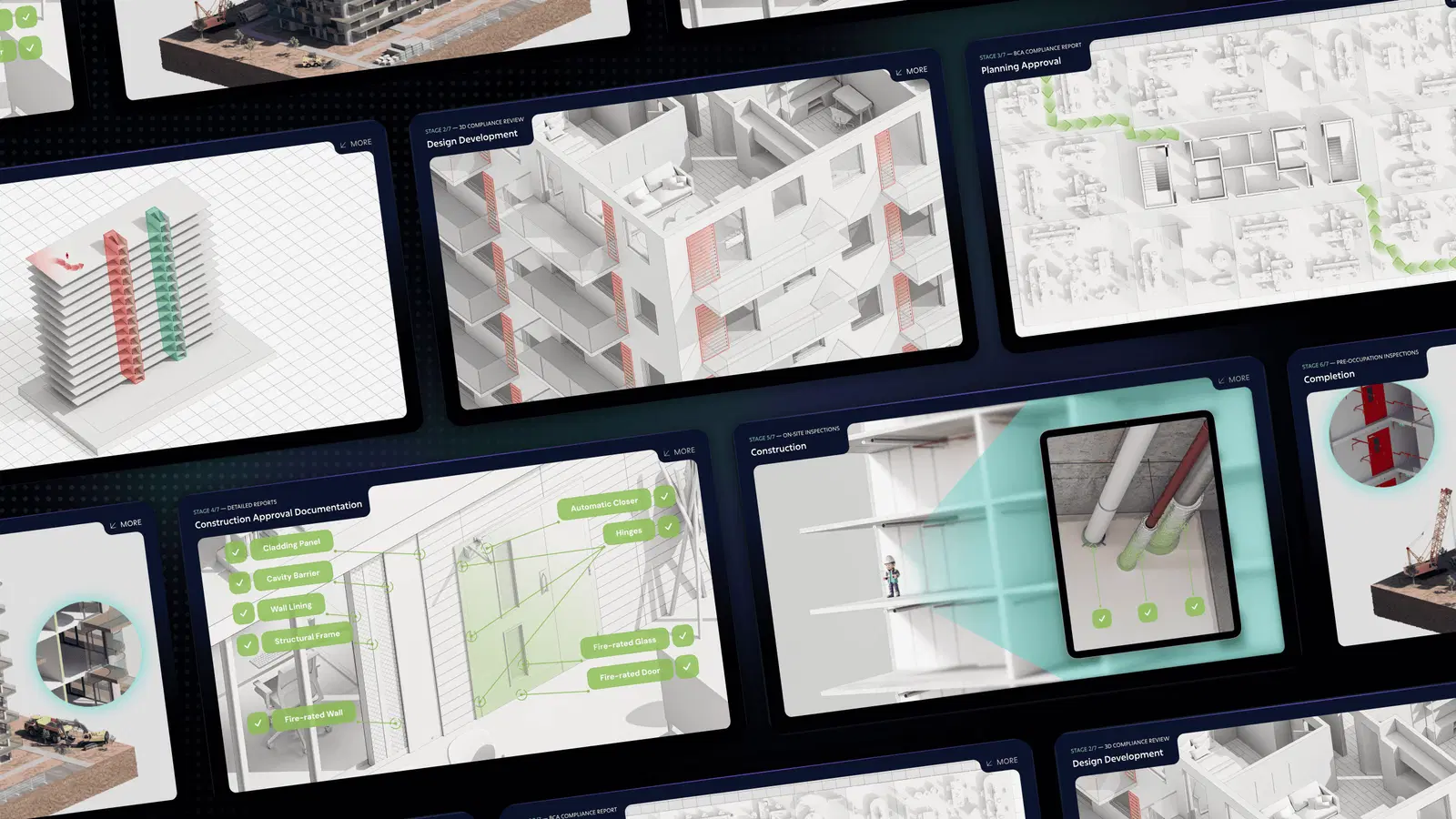
The centrepiece of the redesign is a scroll-triggered animation sequence built around CCG's full seven-stage project lifecycle. Each stage unfolds in Revit-style 3D, using red-to-green compliance transitions to show how issues are identified and resolved before they reach construction. The website is structured around how architects, developers, and project managers actually run projects, so when they land on it, they can see exactly where CCG fits and when to bring them in.
CCG needed a website that could reposition them as a design-stage partner and make that case to the architects, developers, project managers, and building owners who hold that decision.
7
Project lifecycle stages animated
Every stage, from feasibility to post-occupancy, was brought to life in 3D.
3
Distinct buyer audiences addressed
Architects, developers, and project managers each got their own entry point.
1
Scroll sequence that makes the case
One continuous animation communicates CCG's value before a word is read.
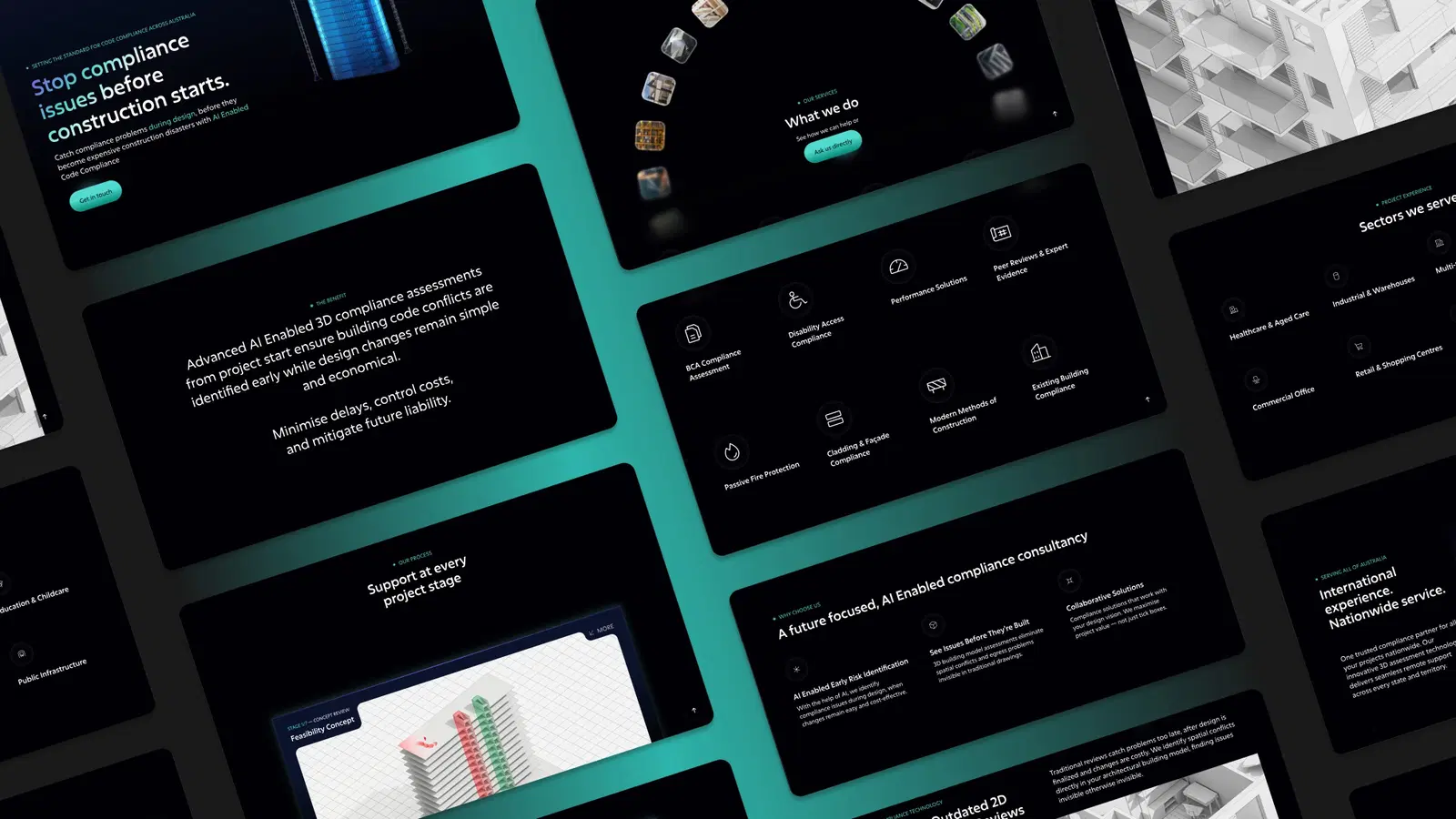
In a compliance-driven industry, the firms that win are those that can make their technical expertise legible to the people funding the projects.
Understanding what really mattered for Code Compliance Group
CCG's target audience thinks in design stages, risk, approvals, and cost impact, not compliance services. The commercial opportunity was clear: reach decision-makers before design is locked, and prevent issues that become exponentially more expensive to fix later.
Challenge
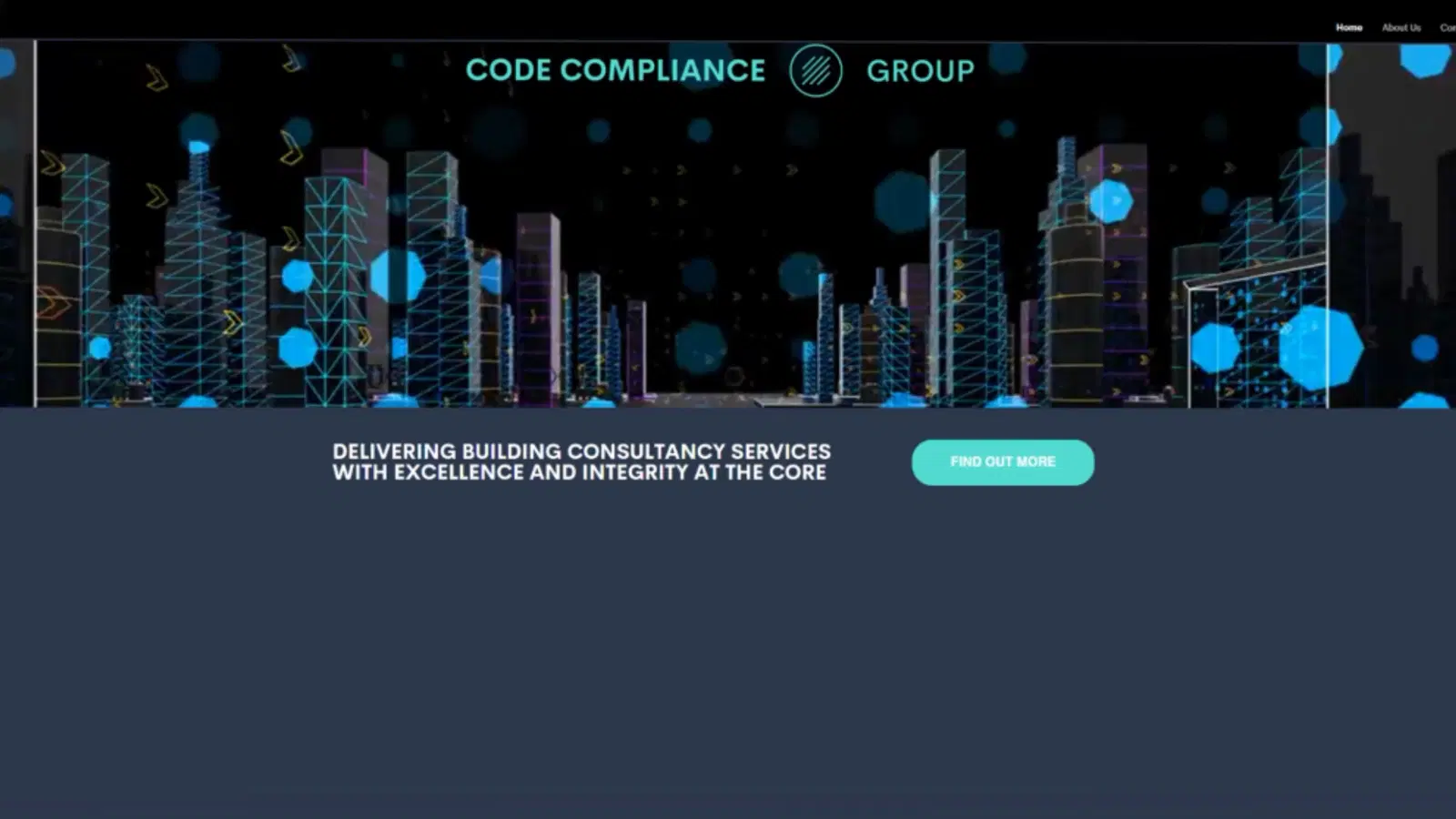
CCG's previous website positioned them as a late-stage checking service. It explained what they did but not when to engage or what the cost of not engaging early would be. Architects, developers, project managers, and building owners visiting the website had no clear path to understanding CCG's value or taking the next step. The result was late engagement, missed opportunities, and a service that was systematically undervalued by the market it was built to serve.
Solution
We restructured the entire website around the project lifecycle. Each of the seven stages became a visual chapter, with its own animation, its own risk narrative, and its own clear articulation of what CCG does at that point and what happens without them. Messaging was rewritten to address architects, developers, project managers, and building owners directly, in the language of design stages and project risk rather than regulatory compliance. Navigation and layout were designed to minimise effort and guide visitors toward enquiry with as little friction as possible.
Our Unique Approach: Designing the Argument
Compliance consultants are brought in too late because their websites explain services rather than consequences. Every element of this site was shaped by how CCG's target audience navigates information and makes decisions, with the seven-stage scroll sequence built so that an architect or developer could move through the full project lifecycle and see exactly where CCG fits, what problems they prevent, and what it costs to skip them.
The animations were designed as commercial arguments. A balcony defect invisible in a 2D drawing but unmistakable in 3D. A single fire seal defect at Level 1 multiplying across twenty floors above. Stage 7 was framed as the outcome to avoid, with cost escalation visualisations making the risk concrete. The red-to-green transition system gives every stage the same visual logic, so the cumulative message lands regardless of where a visitor enters the site.
We also introduced a Henry avatar representing the CCG expert, who guides visitors through the lifecycle journey and reinforces the consultancy's positioning as a collaborative partner embedded in the project, not a vendor brought in at the end.

Arthur Stefenbergs
Sydney Director
Most compliance websites describe what the service does. This one makes the case before a single word is read. That clarity came from designing it from the inside. Our background in architecture meant the site was built around how architects, developers, and project managers actually think, so when they land on it, the value is already obvious.
Let your brand shine.
Our goal was to build a website that repositioned CCG in their market and gave their target audience a clear, compelling reason to engage earlier.
Lifecycle-Driven Structure
We organised the entire website around CCG's seven-stage service model, turning a list of services into a sequential narrative that mirrors how architects, developers, and project managers actually experience a project. Each stage has its own animation, its own risk story, and its own clear articulation of value. Visitors move through the site the same way they move through a project.
Audience-Specific Messaging
The site was written and structured for three distinct audiences: architects, developers, and project managers. Each group navigates information differently and responds to different risk signals. Messaging was calibrated accordingly, using the language of design stages, approvals, and cost impact rather than regulatory terminology.
Stage-Specific Narrative Design
Each animation was scripted around the specific risk and resolution logic of its stage. The Design Development animation shows a climbable balcony element multiplying across 40 floors, invisible in 2D drawings but unmistakable in 3D. The Construction animation shows a single defective fire seal caught at Level 1 preventing the same defect propagating through 20 floors above. Stage 7 frames the consequence of skipping the earlier stages entirely, with cost escalation scenarios making the risk concrete and immediate.
Friction Reduction at Every Step
Navigation, layout, and content hierarchy were all designed around one objective: getting the right visitor to an enquiry with minimum effort. Section structure, scroll behaviour, and calls to action were each considered from the perspective of a time-pressured architect or developer making a fast decision about whether to engage.
The completed website gives architects, developers, project managers, and building owners a clear understanding of when to engage CCG and what the cost of not engaging early looks like, positioning the consultancy as a partner worth bringing in from the first stage of a project.
Looking Forward: Production That Pays Forward
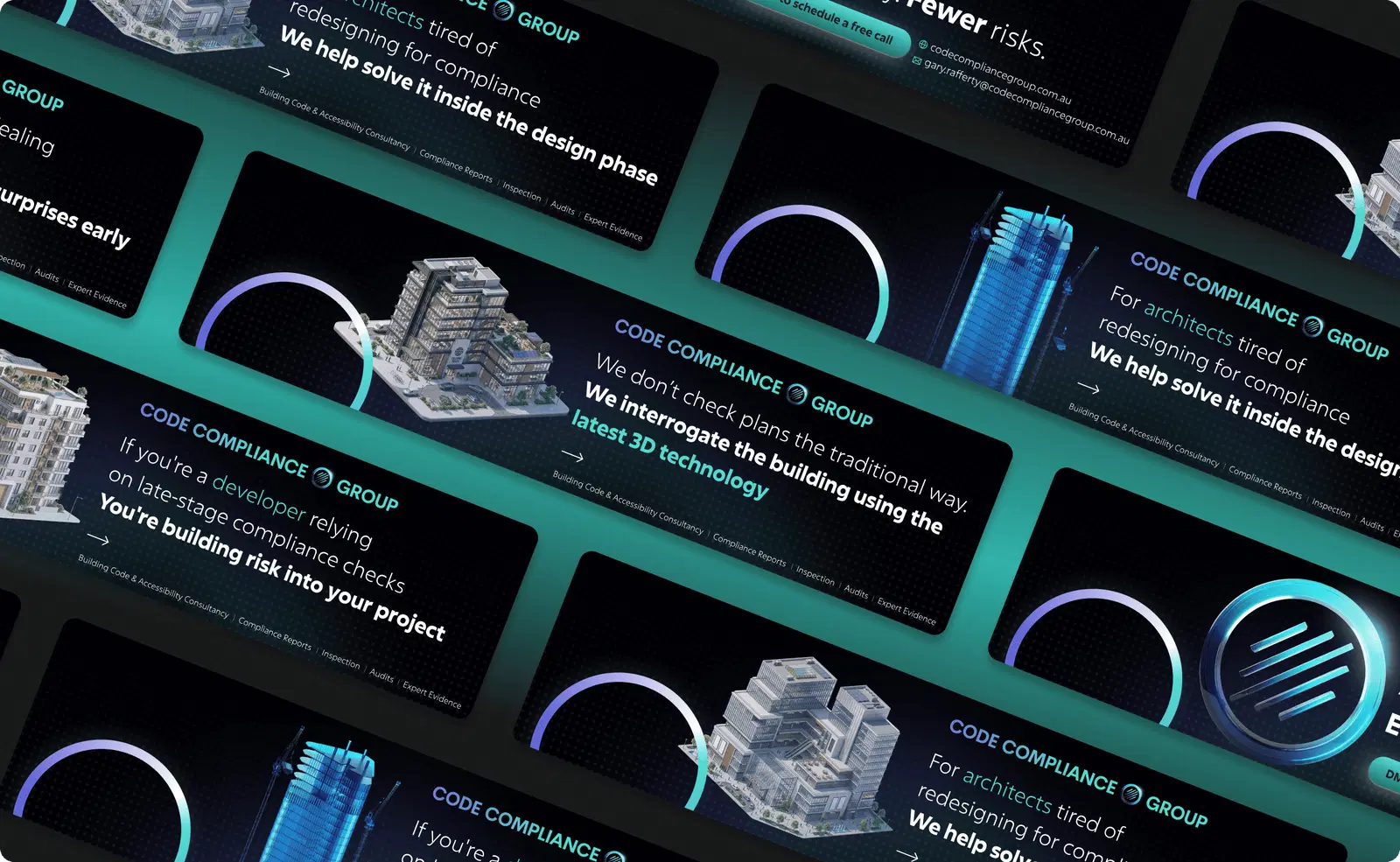
The visual language, asset library, and animation system built for this project extend well beyond the website. The seven-stage framework, massing models, wall section details, and construction sequences can support pitch presentations, social content, and stage-specific campaign materials as CCG grows its national presence. The production done once keeps working.


.png?width=1600&quality=75&format=webp)
A website that speaks the language of Code Compliance Group's clients and makes the case for early engagement before they have to.
Gary Rafferty
Director, Code Compliance Group
Arthur and Dagmara understood our clients, architects, developers, project managers, and building owners, and built the website around how they actually think. The biggest shift was moving from a 2D way of explaining compliance into the 3D world our clients operate in. It's now very clear when we should be engaged and what value we bring. In hindsight, not having this was costing us work we didn't even realise we were losing.
Read more about our work

Brand Strategy
Content Strategy
Brand Identity
1/10
Premier Construction Software - Launching software through complete brand activation and digital ecosystem development
We transformed how Premier communicates the value of its ERP, crafting a cohesive brand, modern website, and interactive demos that turn complex features into clear benefits.
Brand Strategy
Content Strategy
Brand Identity
Premier Construction Software - Launching software through complete brand activation and digital ecosystem development

Automotive CGI
Art Direction
3D Product Visualization
2/10
Revolutionizing luxury automotive launches with Unreal Engine's real-time visualization
We leverage Unreal Engine to revolutionize luxury automotive marketing with real-time cinematic visualizations and animations.
Automotive CGI
Art Direction
3D Product Visualization
Revolutionizing luxury automotive launches with Unreal Engine's real-time visualization
Brand Strategy
Content Strategy
3D Product Visualization
3/10
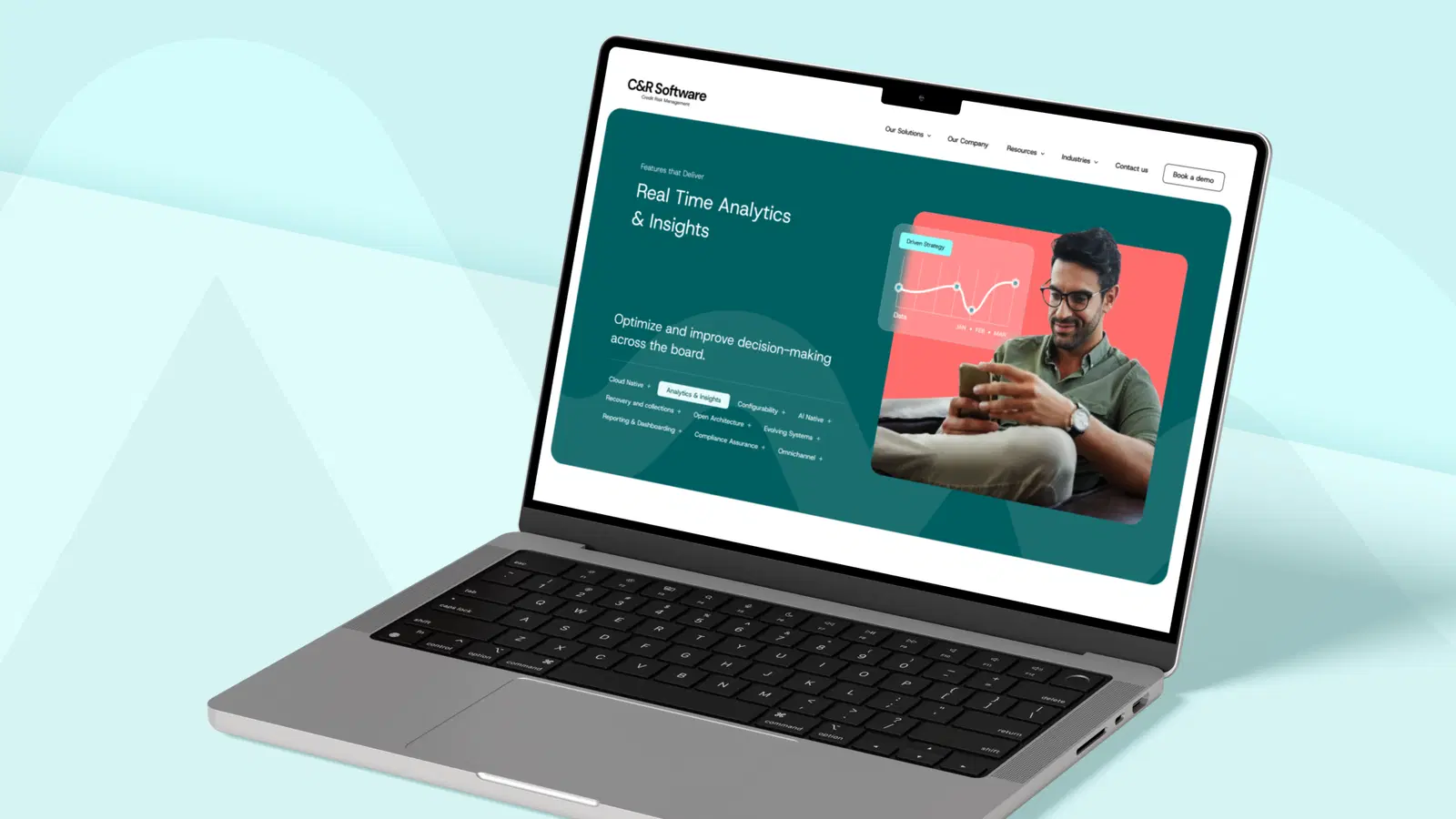
C&R Software - Repositioning C&R Software's 40 years of expertise as clear competitive advantage
We modernized C&R Software’s experience, turning complexity into clarity. We focused on better communication of their differentiators, and building a clean, modern and lovable brand.
Brand Strategy
Content Strategy
3D Product Visualization
C&R Software - Repositioning C&R Software's 40 years of expertise as clear competitive advantage
Brand Strategy
Brand Identity
Content Strategy
4/10
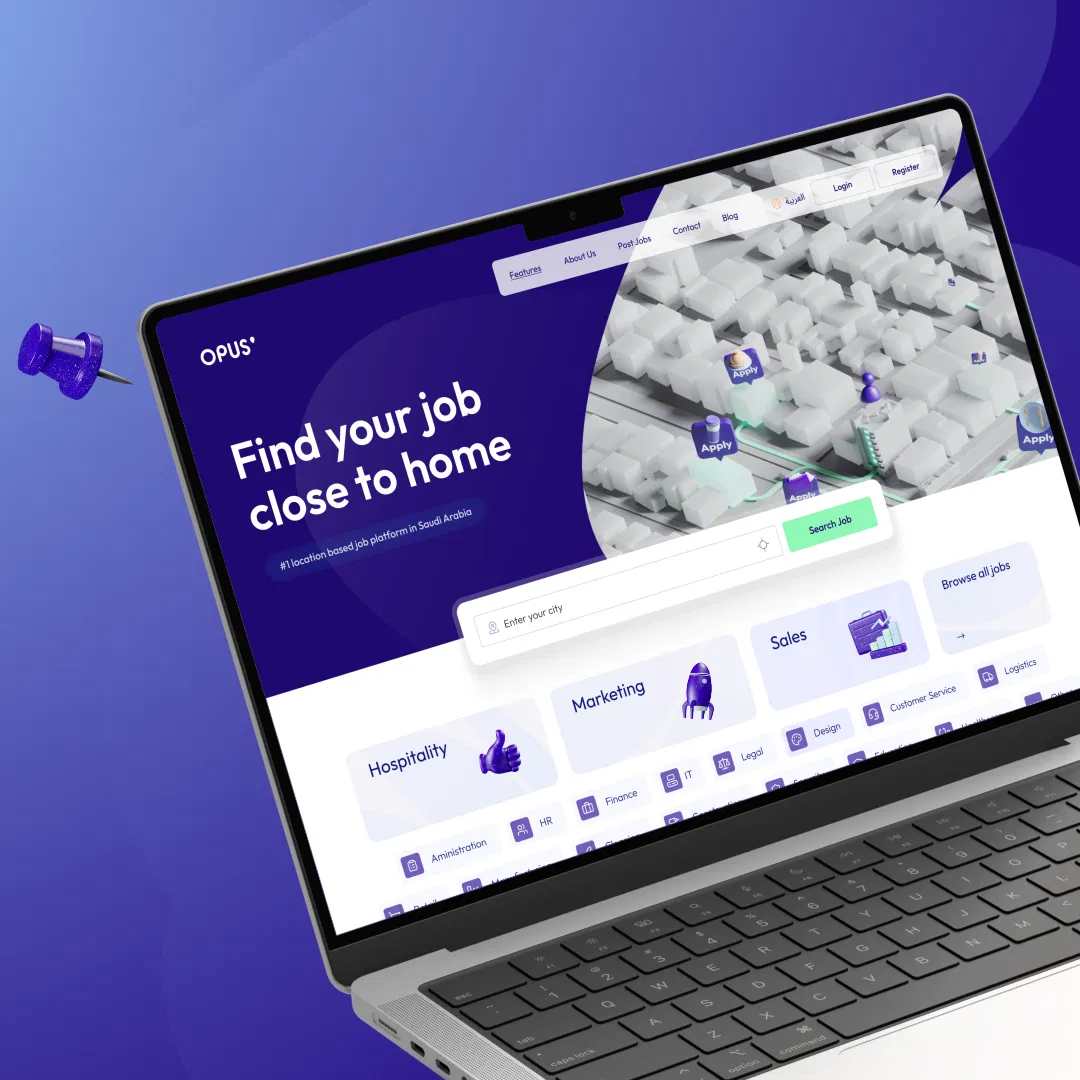
Opus - 152% valuation growth: Building AI-powered hiring platform in just 3 months
We designed, built, and launched the web and mobile app as Saudi Arabia's leading location-based job platform.
Brand Strategy
Brand Identity
Content Strategy
Opus - 152% valuation growth: Building AI-powered hiring platform in just 3 months
-1.png?width=1600&quality=75&format=webp)
Full Stack Development
AI Integration
System Architecture
5/10
Fulcrum - Building AI-powered insurance automation that reduced policy processing from 4 hours to 10 minutes for 100+ agencies
AI automation software that transforms 4-hour insurance tasks into 10-minute workflows for 100+ agencies who can finally free up agent's time for the work that actually matters.
Full Stack Development
AI Integration
System Architecture
Fulcrum - Building AI-powered insurance automation that reduced policy processing from 4 hours to 10 minutes for 100+ agencies

Brand Strategy
Architecture Visualizations
Architectural Animations
6/10
Dubai's Tiger Sky Tower - Enabling global sales for a skyscraper through photorealistic visualizations
We created cinematic visualizations that transformed Tiger Sky Tower from a Dubai luxury development into an iconic lifestyle brand, accelerating international sales.
Brand Strategy
Architecture Visualizations
Architectural Animations
Dubai's Tiger Sky Tower - Enabling global sales for a skyscraper through photorealistic visualizations

Brand Identity
3D Animations
UX Design
7/10
Premier Charity Open 2025 - Strategic digital design for a charity golf tournament launch
We designed Premier's Charity Open 2025 digital experience from brand identity to immersive 3D web animation, establishing immediate credibility for their inaugural charity golf tournament and converting industry interest into confirmed participation.
Brand Identity
3D Animations
UX Design
Premier Charity Open 2025 - Strategic digital design for a charity golf tournament launch
Full Stack Development
DevOps and Infrastructure
Artificial Intelligence
8/10
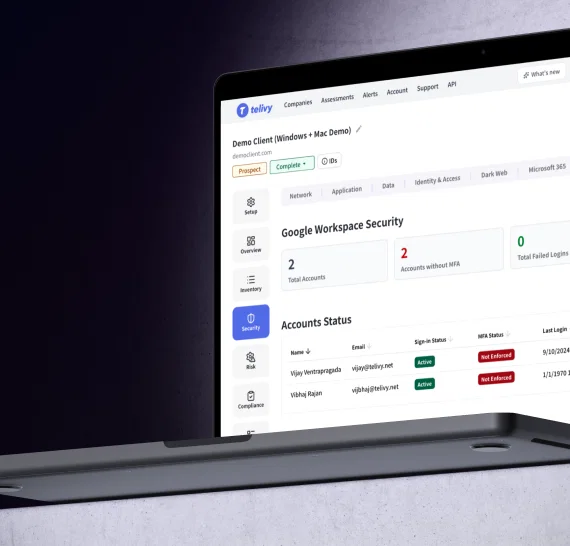
Telivy - Building AI-powered cybersecurity platform through multiple strategic pivots to successful acquisition
We acted as Telivy's initial engineering team and built their complete cybersecurity platform, supporting multiple strategic pivots that transformed a cyber insurance marketplace into a security audit platform for MSPs, ultimately preparing the company for successful acquisition.
Full Stack Development
DevOps and Infrastructure
Artificial Intelligence
Telivy - Building AI-powered cybersecurity platform through multiple strategic pivots to successful acquisition
Feasibility Sprint Package
Architectural Concept Design Sprint
Architecture Visualizations
9/10
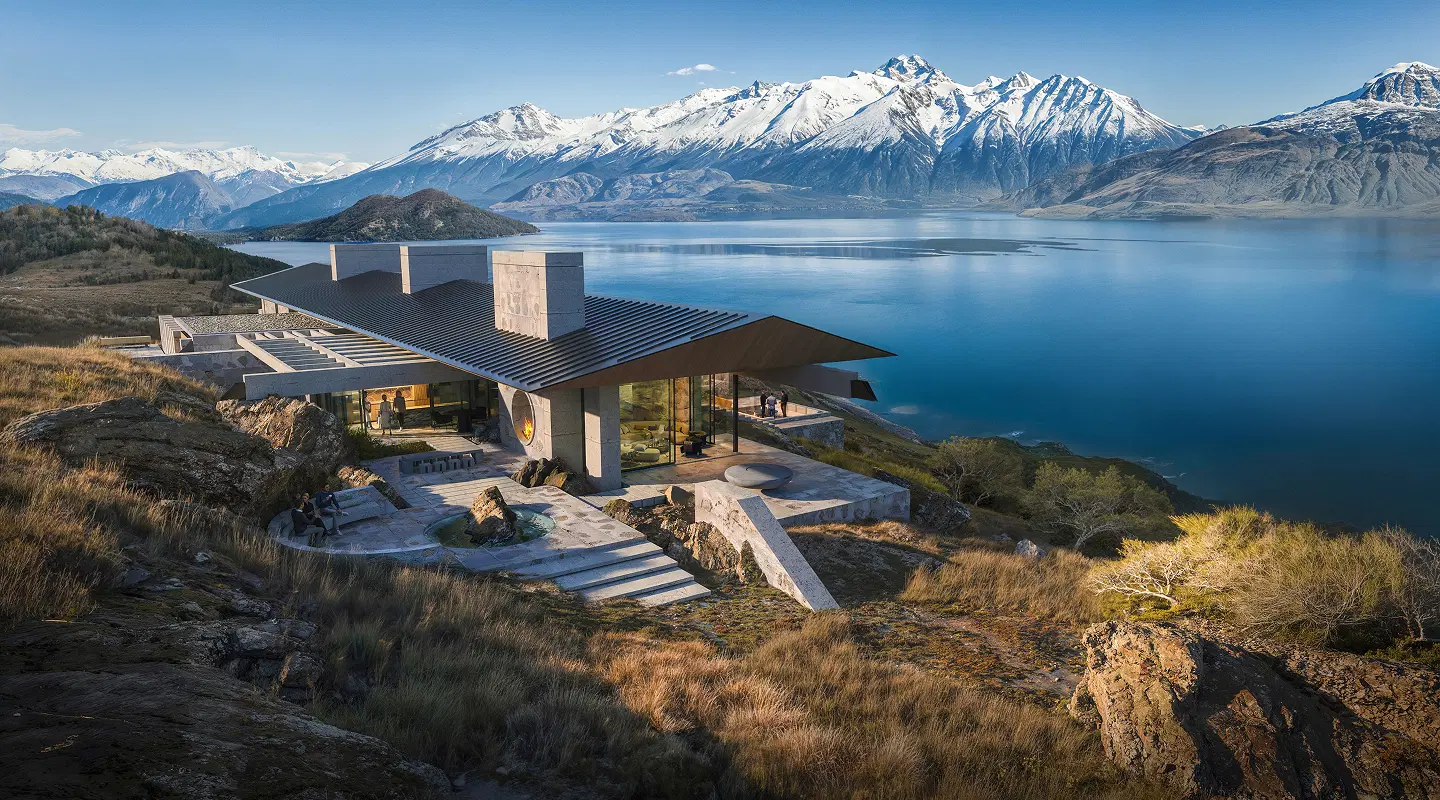
Wunya House - How we made this house land into a complete architectural vision for elite buyers
Wunya House is an architectural vision for premium Queenstown land. The design reflects the mountain profile with detailed specifications and renderings, turning land into a purchase-ready opportunity.
Feasibility Sprint Package
Architectural Concept Design Sprint
Architecture Visualizations
Wunya House - How we made this house land into a complete architectural vision for elite buyers
UX Research
UI Design
UX Design
10/10
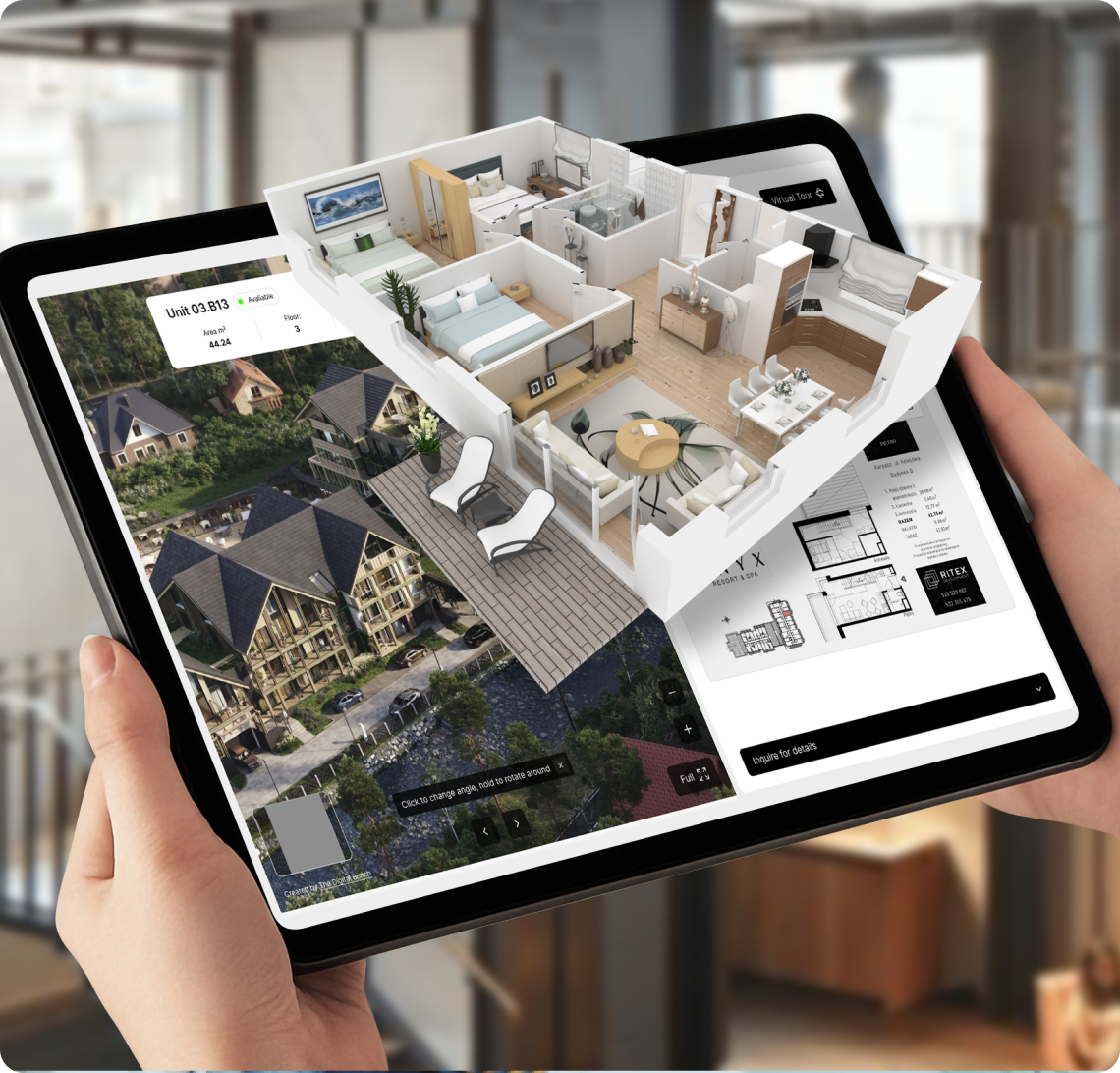
Your Next Home - Building immersive 360° real estate platform that reduced time-to-contract by 31% and increased qualified inquiries by 49%
Our clients asked us for real estate experiences that would improve their sales. We delivered an immersive 360° platform that transforms static listings into global engagement experiences.
UX Research
UI Design
UX Design
Your Next Home - Building immersive 360° real estate platform that reduced time-to-contract by 31% and increased qualified inquiries by 49%
1/10