11 February 2025
How Does Consumer Research Behavior Change Website Lead Generation Strategy?
Categories:
Eighty-one percent of shoppers now research online before making purchase decisions. Your website isn't just competing for attention anymore. It's competing to be the most credible, most useful source in a buyer's research process. If your site treats visitors like they're ready to buy instead of ready to learn, you're losing leads before the conversation starts.

Eighty-one percent of shoppers now research online before making purchase decisions. Your website isn't just competing for attention anymore. It's competing to be the most credible, most useful source in a buyer's research process. If your site treats visitors like they're ready to buy instead of ready to learn, you're losing leads before the conversation starts.
Why Do Buyers Research Before They Contact You?
The research-first approach isn't new, but its dominance is. Two decades ago, buyers gathered information through limited channels: advertisements, referrals, or sales representatives. Access to comparative information required effort. The internet didn't just add another channel. It fundamentally restructured the power dynamic between buyers and sellers.
Search engines democratized access to product specifications, pricing comparisons, competitor analysis, and peer reviews. This created informed buyers who approach purchases differently. The sales conversation shifted from "tell me about your product" to "I've evaluated three alternatives and have specific questions about your differentiation."
What changed when buyers gained unlimited information access?
The buyer's journey now happens largely without you. Someone might spend weeks researching your category, comparing offerings, and forming preferences before filling out a contact form. Your website must serve this invisible research process or you'll never enter their consideration set.
Research duration varies by purchase complexity. Enterprise software purchases might involve months of research. Professional service selection might take weeks. The consistent pattern is that buyers want to feel informed and confident before committing time to a sales conversation. They're avoiding premature contact because they haven't yet determined if you're worth engaging with.
What Role Does Your Website Play in Research-Driven Buying?
Your website functions as your primary qualification mechanism. Before buyers speak with sales, schedule demos, or subscribe to your newsletter, they're evaluating your site to determine if you're credible, relevant, and differentiated enough to merit further attention.
Your sales team only gets opportunities after your website has convinced someone you're worth talking to. The website-as-filter dynamic means your digital strategy and website design directly determine lead quality and volume. A site optimized for research-driven buyers generates qualified leads who understand your value proposition. A site designed around sales messaging generates fewer, less-qualified inquiries.
What are buyers evaluating when they visit your website?
Research-driven buyers evaluate websites across several dimensions simultaneously. They assess competence through content depth and accuracy. They evaluate trustworthiness through case studies and transparency. They determine relevance by seeing if you understand their specific situation. They compare differentiation by identifying what you offer that alternatives don't.
Most websites fail this evaluation because they prioritize promotional messaging over substantive information. Generic claims about being "industry-leading" don't help someone determine if you're the right fit.
How Should You Structure Content for Research-Driven Visitors?
Content strategy for research-driven audiences requires a different approach. You're not writing to convince someone who's already engaged. You're writing to help someone determine whether they should engage at all.
Effective research content directly addresses questions buyers ask during evaluation. This includes detailed explanations of how your approach works, honest discussion of when your solution is and isn't appropriate, specific examples of past work with clear outcomes, and comparative information about your positioning.
Content strategy for research audiences means prioritizing utility over persuasion. A comprehensive guide that helps someone understand a complex topic serves your interests better than marketing copy claiming you're the best choice.
How detailed should your website content actually be?
Research-driven buyers specifically seek detailed content because it helps them evaluate your capabilities. Surface-level content forces them to look elsewhere. Detailed content doesn't mean verbose. It means addressing topics with sufficient depth that someone can use the information to inform decisions.
A UX design guide that explains principles, shows examples, and discusses trade-offs helps buyers understand what good design entails while positioning you as knowledgeable.
Many companies avoid pricing transparency, believing it invites comparison shopping. For research-driven buyers, this opacity is disqualifying. You don't need detailed pricing if your model is customized, but explain your pricing structure, typical ranges, and influencing factors. Explaining your process helps buyers understand what working with you entails.
How Does Trust-Building Work Differently Online?
Trust in digital contexts requires explicit demonstration rather than implicit relationship-building. On a website, trust must be constructed through evidence and consistency.
Credibility comes from showing rather than claiming. Case studies with specific outcomes demonstrate capability more effectively than statements about expertise. Client testimonials describing concrete results carry more weight than generic praise.
Brand identity consistency across your website reinforces professional presentation. When visual design, messaging tone, and content quality align, it signals attention to detail. Inconsistency suggests lack of care or coordination.
Why does professional design matter for credibility?
Your website's design quality functions as a proxy for your work quality. If you can't execute your own site professionally, buyers question whether you can execute their project professionally. Professional design means intentional, consistent, and appropriate for your audience. Clean layout, readable typography, logical information architecture, and fast performance contribute to the impression that you're competent and trustworthy. Strong UI design ensures every interactive element functions intuitively, reinforcing that attention to detail extends throughout the user experience.
Demonstrated expertise helps buyers understand something new or shows them how to think about a problem differently. Promotional content simply claims you're qualified. Shift from "we are experts in X" to "here's how X actually works and why it matters for your situation."
What Information Architecture Supports Research Behavior?
How you organize information directly affects whether research-driven buyers can efficiently evaluate you. Poor information architecture forces people to dig through irrelevant content. Good architecture anticipates research questions and makes answers easily accessible.
Navigation should be organized around buyer questions and needs, not your internal structure. Someone researching architectural visualization partners isn't thinking "I need photorealistic rendering." They're thinking "I need to help stakeholders understand this design before construction begins." Your navigation should speak to that actual problem.
How do you accommodate different research stages?
Buyers at different research stages need different information. Early-stage researchers need educational content. Mid-stage researchers need detailed information about your approach. Late-stage researchers need clear engagement steps. Your site should accommodate all stages simultaneously through multiple entry points and content paths.
Every piece of content should serve a clear purpose in helping someone make an evaluation decision. Research-driven buyers want access to comprehensive information. They won't read everything, but they want to know they could find specific details if needed. Clear organization and good UX design make extensive content navigable rather than overwhelming.
How Do Interactive Tools Change Research Experiences?
Static content informs. Interactive tools let buyers explore and personalize their understanding. This matters because research-driven buyers often need to understand how your offering applies to their specific situation.
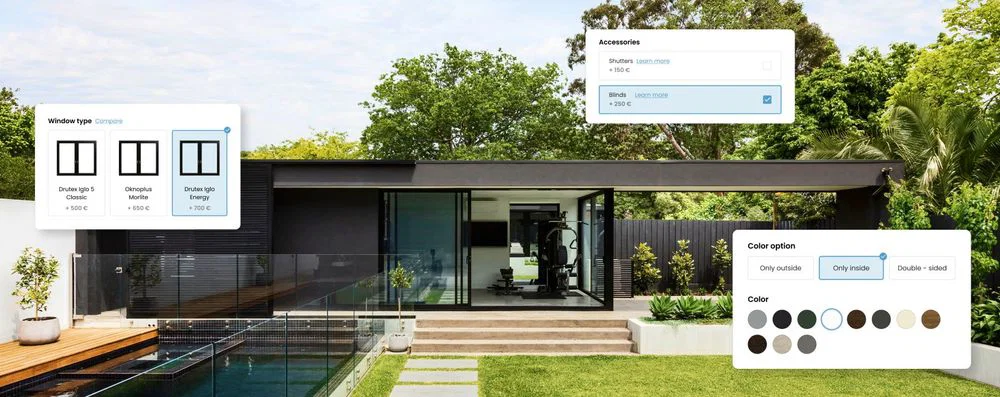
Configurators let buyers test possibilities without requiring sales interaction. Whether visualizing a customized product or exploring service configurations, configurators transform abstract offerings into concrete, personalized scenarios. They help buyers develop informed questions before engaging with sales, making subsequent conversations more productive.
What role should AI chat play in buyer research?
Research-focused chat helps buyers navigate your content, find relevant information, and understand concepts without pressure to convert. An AI chat that helps someone find the most relevant case study or explains technical concepts on demand removes friction from the research process.
Interactive elements should solve actual research problems, not just demonstrate technical capability. Test against the question: does this help someone make a more informed evaluation decision? If it primarily serves aesthetic purposes, it's probably not worth the complexity.
Why Does Mobile Experience Matter for Research Behavior?
Research happens across devices and contexts. If your site doesn't work seamlessly across devices, you're inserting friction into a research process that already requires significant effort.
Mobile optimization isn't just about responsive layout. It's about maintaining information density and navigability despite screen size constraints. Many sites treat mobile as a simplified version, removing content to reduce scrolling. For research-driven buyers, this backfires. They're researching on mobile because that's their available device, not because they want less information.
How do technical performance issues affect research completion?
Page load performance directly impacts whether people complete their research on your site or abandon it. A slow site signals either technical incompetence or lack of attention to user experience. Research behavior involves multiple page views. If each page requires significant waiting, the accumulated friction becomes substantial.
What Conversion Strategy Works for Research-Driven Audiences?
Traditional conversion optimization focuses on capturing information as early as possible. For research-driven buyers, premature conversion requests feel pushy. Your conversion strategy needs to align with research timelines rather than fighting against them.
Conversion requests should be proportional to the commitment you're requesting and the value you've provided. The goal is to earn conversion through demonstrated value, not to capture contact information from anyone who visits. A smaller number of highly qualified leads who've thoroughly researched produces better outcomes than a larger list of premature contacts.
What types of conversions support buyer research?
Offer conversions that advance someone's research. Downloading a comprehensive guide, accessing a detailed case study, or using a specialized calculator all provide tangible value while demonstrating continued interest. These value-exchange conversions create mutual benefit.
Different research stages require different calls to action. Early-stage researchers need educational content. Mid-stage researchers need detailed information about your approach. Late-stage researchers need clear engagement steps. A deep technical article should lead to related technical content, not immediately to "schedule a consultation."
How Do You Measure Success with Research-Driven Audiences?
Traditional website metrics focus on immediate conversion actions. For research-driven audiences, success metrics need to account for longer timelines and multiple touchpoints.
Time on site and pages per session become more meaningful for research audiences. Someone spending fifteen minutes reading multiple articles demonstrates genuine engagement, even without immediate conversion. Return visitor rates show whether people find your content valuable enough to come back as their research progresses.
Analytics and reporting should track research paths through your site. Which content sequences lead to eventual conversion? Where do people spend time versus bounce? What information gaps cause people to leave?
What do research patterns reveal about content effectiveness?
Research timelines vary dramatically by industry and purchase complexity. Your analytics should track cohorts over time to understand typical research durations. This informs realistic expectations about conversion timing and helps identify whether research content is effectively moving people toward engagement.
If people consistently research extensively but rarely convert, it suggests either targeting problems (attracting wrong-fit prospects) or conversion barriers (something prevents qualified prospects from engaging). Analysis should identify where research patterns diverge between eventual customers and non-converters.
How Should Testing and Optimization Work for Research Content?
Continuous improvement for research-focused sites requires different testing approaches than conversion-rate-optimization for transaction sites. You're optimizing for understanding and evaluation, not just clicks and conversions.
Test content depth and structure. Does longer, comprehensive content perform better than concise summaries? Do visitors engage more with narrative explanations or structured frameworks? Test information architecture. Do visitors find what they need through navigation, or rely primarily on search?
How do you balance metrics with content quality?
Conversion rate optimization for research sites means optimizing the quality of understanding visitors achieve, not just conversion speed. Better understanding leads to better-qualified leads, even if it takes longer.
The risk with optimization is over-indexing on metrics that don't indicate success for research audiences. Shortening content might reduce bounce rates but harm comprehension. Maintain editorial standards that prioritize substantive value over metrics. The goal is making great content more accessible, not making mediocre content perform better statistically.
What Makes Research-Focused Website Strategy Actually Work?
Designing websites for research-driven buyers requires accepting that your site's primary job is education and qualification, not immediate conversion. This represents a fundamental strategic shift from viewing websites as promotional tools to viewing them as research resources that generate qualified leads as a byproduct.
When your website effectively supports buyer research, the leads you generate are substantially more qualified. They understand what you offer, how you work, and why you might be the right fit. The sales conversation starts from mutual understanding rather than basic education.
Why does this approach generate better business outcomes?
This qualification effect means research-optimized sites often generate fewer total leads than promotion-heavy sites, but conversion rates from lead to customer are much higher. You're trading volume for quality. Effective marketing strategy recognizes this shift and aligns all channels around supporting informed buyer decisions rather than pushing for premature conversions.
Building comprehensive research content is a significant investment. Developing content architecture, creating substantive pieces, and optimizing user experience can take months. This requires ongoing maintenance as your offerings evolve and as you identify content gaps. The return compounds over time. Each piece continues serving research needs indefinitely. As your content library grows, it captures a wider range of research queries and supports more complete evaluation.
What separates websites that convert researchers from those that lose them?
The fundamental difference is respecting research behavior rather than fighting it. Sites that convert researchers recognize that buyers need time, information, and space to evaluate. They provide substantive content without demanding premature commitment. They demonstrate expertise through usefulness rather than claims.
Sites that lose researchers treat visitors like they should already be ready to buy. They prioritize promotional messaging over substantive information. They gate basic content behind forms. They push for sales conversations before buyers have sufficient information. This approach worked when buyers had fewer alternatives. It fails in research-driven markets.
Research-driven buying behavior isn't temporary or reversible. Information access continues expanding. Buyers will continue educating themselves before engaging with vendors. Your website strategy needs to serve this reality. The businesses that succeed are those that embrace their role in buyer research and build websites that genuinely help people make informed decisions.
Keep reading
Marketing
Business
1/10
Which Digital Investments Actually Hold Value During Budget Pressure: Website, Brand, or Content?
03 October 2023
Marketing
Business
Which Digital Investments Actually Hold Value During Budget Pressure: Website, Brand, or Content?
03 October 2023

CGI
Business
2/10
The Benefits of 3D Walkthroughs for Architects and Clients
08 August 2023
CGI
Business
The Benefits of 3D Walkthroughs for Architects and Clients
08 August 2023

Marketing
3/10
10 Critical Success Factors Every Startup Founder Must Master to Avoid Failure
10 December 2024
Marketing
10 Critical Success Factors Every Startup Founder Must Master to Avoid Failure
10 December 2024

Marketing
Design
4/10
UX/UI Design Trends for 2026: What's Worth Your Investment (And What's Just Hype)
13 January 2026
Marketing
Design
UX/UI Design Trends for 2026: What's Worth Your Investment (And What's Just Hype)
13 January 2026

Marketing
5/10
Creating an Interactive Buying Experience: The Power of 3D Product Configurators
13 August 2023
Marketing
Creating an Interactive Buying Experience: The Power of 3D Product Configurators
13 August 2023

Marketing
6/10
The Benefits of 360-Degree Product Views for Online Shopping
08 August 2023
Marketing
The Benefits of 360-Degree Product Views for Online Shopping
08 August 2023

Marketing
7/10
How Does 3D Product Animation Transform Social Media Marketing Performance?
10 January 2024
Marketing
How Does 3D Product Animation Transform Social Media Marketing Performance?
10 January 2024

Business
Marketing
8/10
Architectural Visualization Saudi Arabia: What International Developers Must Know
17 February 2026
Business
Marketing
Architectural Visualization Saudi Arabia: What International Developers Must Know
17 February 2026

CGI
Marketing
9/10
Why Real Estate Property Launches Fail Without Integrated Communication
09 April 2025
CGI
Marketing
Why Real Estate Property Launches Fail Without Integrated Communication
09 April 2025
Marketing
10/10
Shopping of the Future: Digital Experiences and Customization
30 October 2024
Marketing
Shopping of the Future: Digital Experiences and Customization
30 October 2024
1/10